
Starfield is a very different proposition compared to the many Elder Scrolls and Fallout games Bethesda has made in the past: it’s a space RPG where the worst thing about it is space.
Instead of a single open world to explore, there are theoretically hundreds — but you can count the ones actually worth visiting on two hands.
Starfield is not a game where you can mark the main objective on your map, turn around, and explore in the opposite direction. Rather, Starfield is those main objective markers, because no matter how fascinating it might be, the game can’t escape the fact that travelling through space simply isn’t all that interesting.
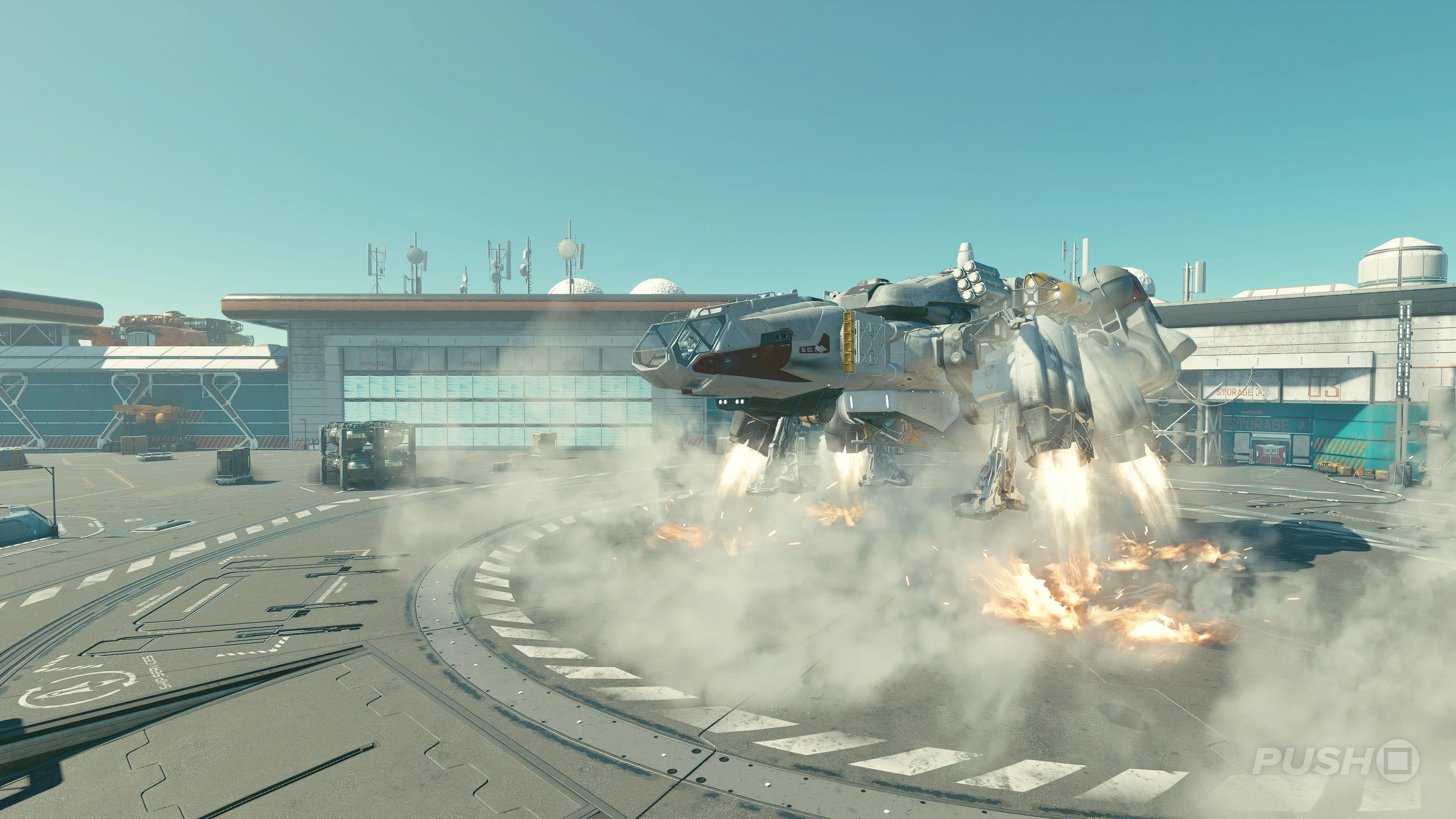
For so long, Bethesda games have been the definition of the phrase: “It’s about the journey, not the destination.”
Starfield turns the saying on its head. It’s designed around fast travelling to that destination, not living and breathing the journey to it.
None of this is new information; the title has been a known quantity for years now following its original Xbox Series X|S and PC release. However, now the RPG lands on PS5 after more than two years of post-launch support, packing a new Free Lanes content update.
This is the definitive console version of Starfield. It has the base game, two optional expansions, every patch, every update, and new features. It makes use of the entire PS5 feature set, with full DualSense controller support (adaptive triggers and haptic feedback) and fast load times and impressive graphics. Then, on PS5 Pro, the latter are enhanced further in new visual modes designed to maximise the console.
That’s still not enough for it to compete with the Bethesda classics of yesteryear.
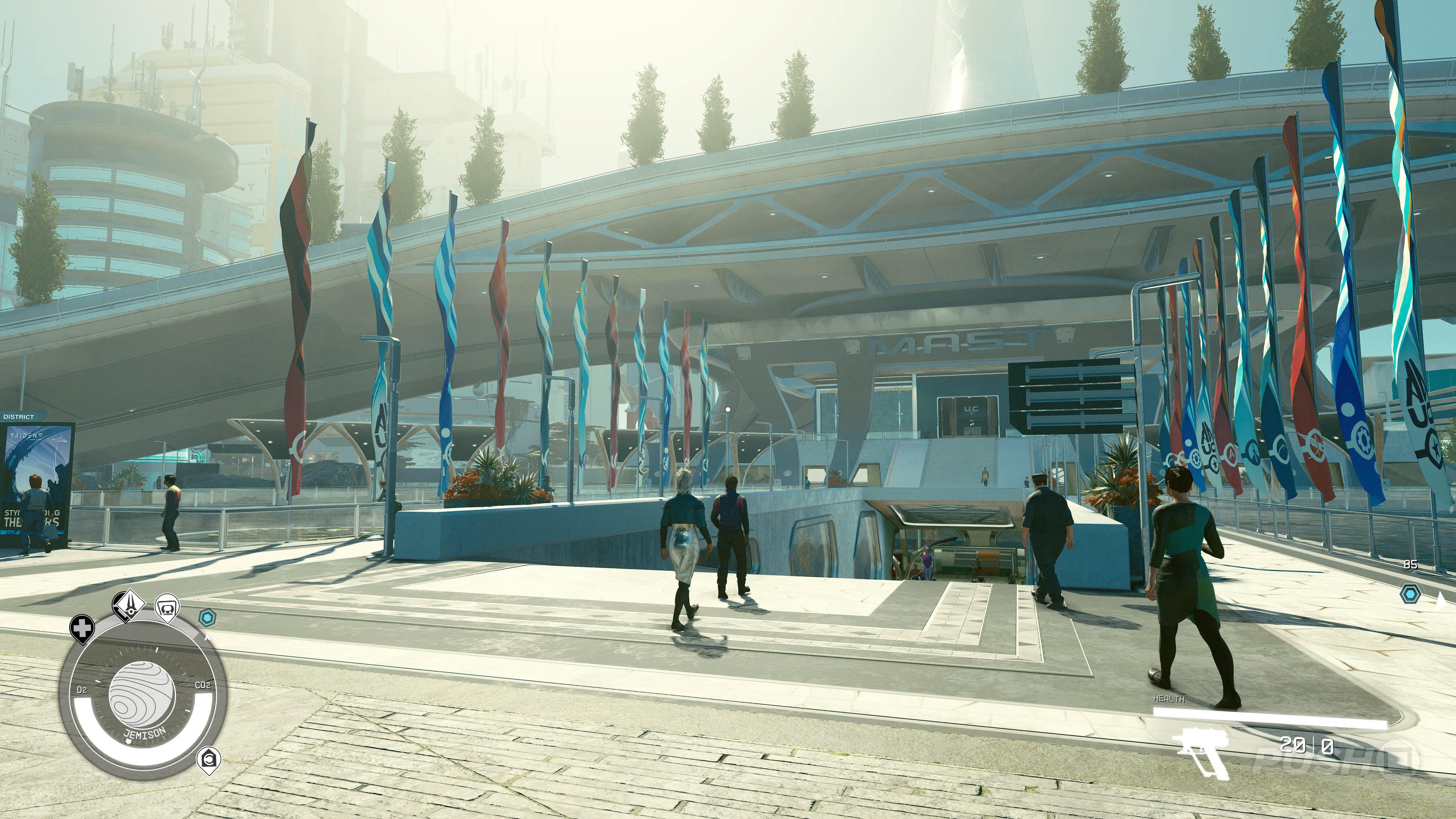
In a vacuum devoid of any expectation, Starfield is a solid RPG experience. It’s got the best combat system Bethesda has ever done, faction questlines offer enticing side stories, and the expanded gameplay options of the new Free Lanes update make spaceflight more worthwhile.
Your custom character is one of very few people in the galaxy who can interact with vision-triggering artifacts, which a group named Constellation is researching. The collective signs you up to find more; a quest that leads to new revelations about the universe and the unknowns inhabiting it.
Bethesda efforts rarely have a quality main storyline, and Starfield continues the streak. The core motive is a dull one, even with its twists and reveals. Some strong missions carry grand set-piece moments, but the artifacts at the end never feel like the prize.
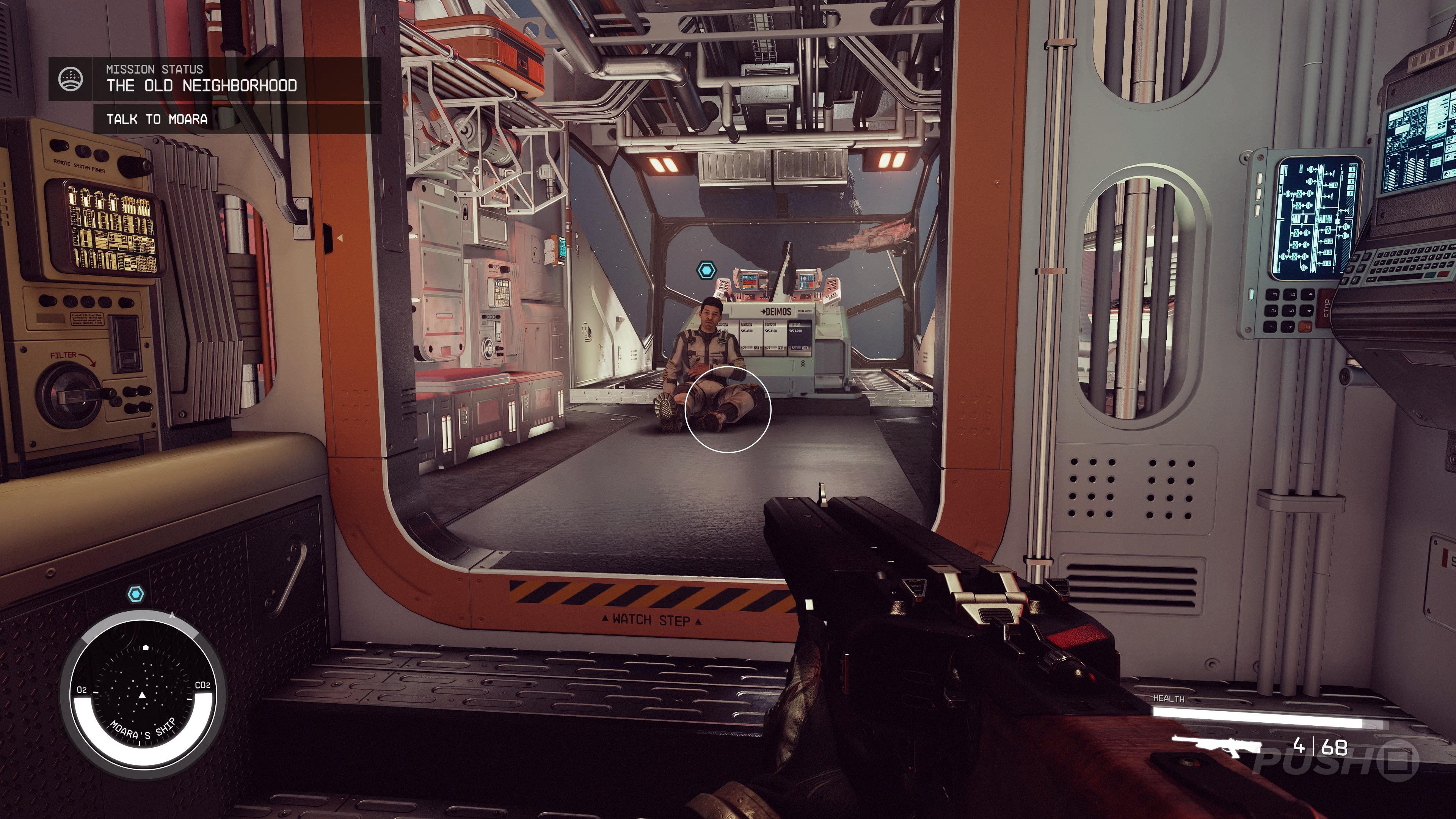
The main quest is better seen as a vehicle to tour the galaxy, meet its people, and see its landmarks. Splintering off from the core pursuits are factions with questlines that represent some of Bethesda’s best storytelling.
Working through the UC Vanguard, Crimson Fleet, Freestar Rangers, and the rest’s sets of missions helps flesh out the world of Starfield and its history. Completing their jobs in tandem with the main quests is how you fashion a quality story experience in Starfield, dealing with alien threats for the UC Vanguard, working with Ryujin Industries to sabotage companies, and more.
It’s during the space in between those objective completions that Starfield loses focus.
A series of messy and confusing menus is required for galactic travel, as warp driving from one planet to the next demands multiple screens of selecting a destination and then another to actually land on its surface. This, along with the random nature of those worlds, kills much of your momentum and urge to explore.
Outside of its hand-crafted cities, the game can’t build any intrigue for locations off in the distance. It’s a randomised wasteland missing the Tenpenny Tower of Fallout 3 and Dinky the T-Rex in Fallout: New Vegas. This is how Starfield quickly starts to feel like a series of objective clears: there’s nothing in between them to satisfy the curiosity of what’s hidden off the beaten path. Starfield doesn’t have one.
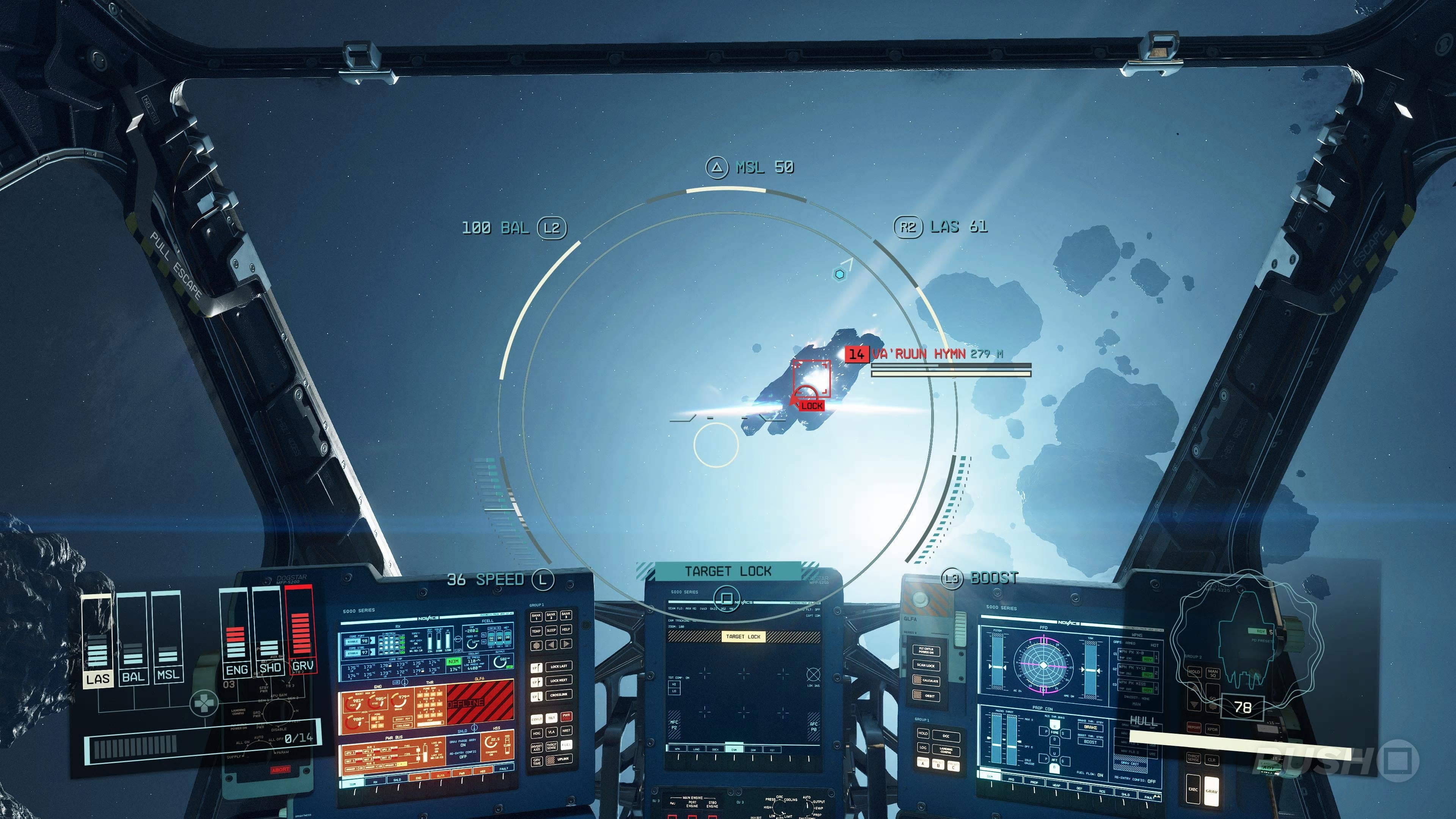
The new Free Lanes content does at least help to bring some connecting dots. You can now cruise between planets within a single solar system, which can invite both friendly and hostile encounters with other ships. You can leave your vessel in autopilot and manage your inventory, talk to companions, and more all while edging closer to your destination.
Free Lanes reduces the title’s reliance on menus during spaceflight, granting more role-playing freedom. It then adds more crafting options, extra ship customisation, new collectible action figures, and more to flesh out the gameplay systems that were already there and introduce new ones.
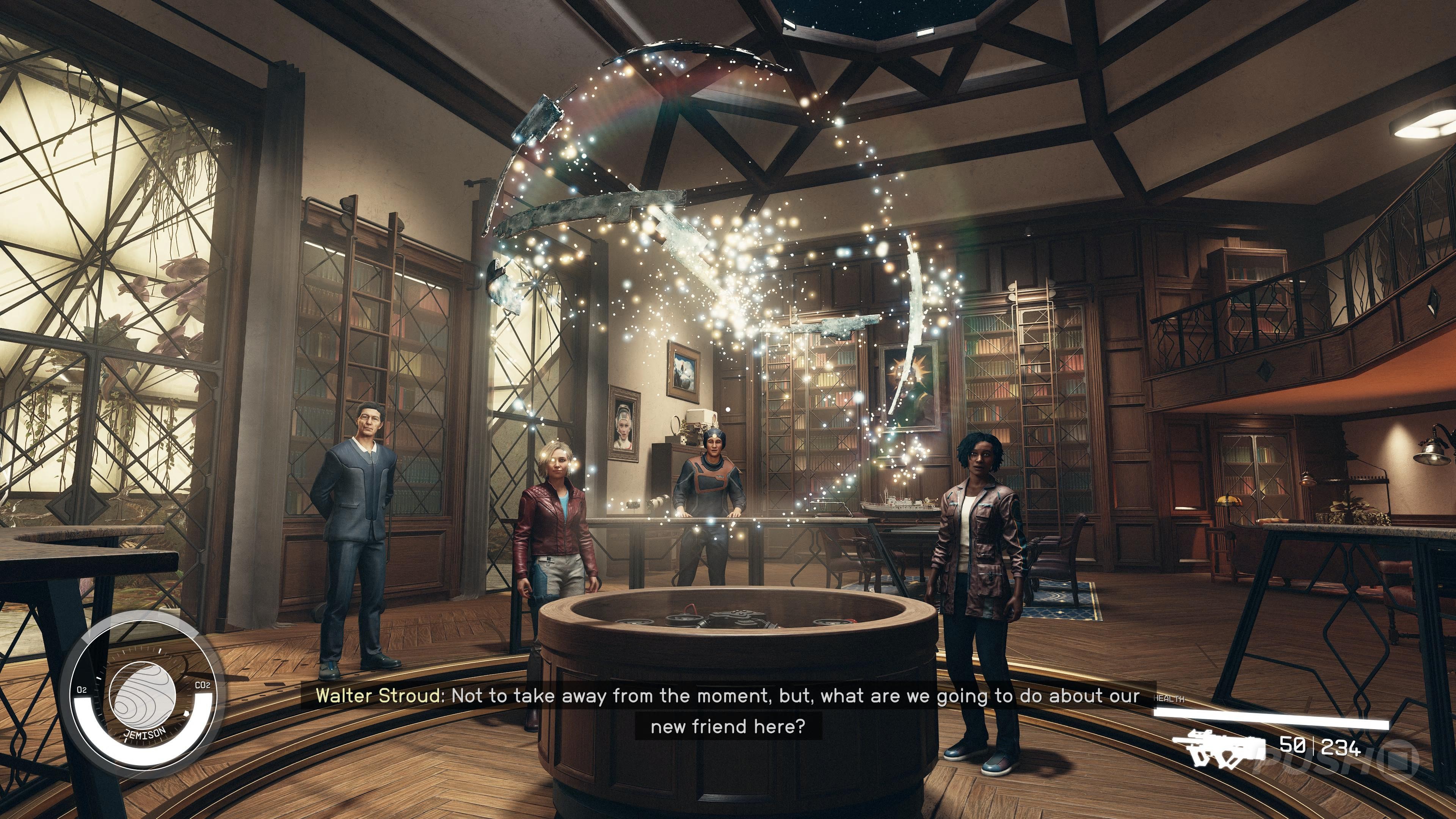
New Game+ also gets some love, a feature the game was already a leader in at release. There are narrative reasons for starting a second playthrough (and beyond), and the Free Lanes update makes one even more viable with devices to bring your gear over.
All these tweaks and add-ons make Starfield its most definitive and comprehensive yet. However, still lacking the connective tissue of Bethesda’s past open worlds, Free Lanes can only do so much to mitigate some of the game’s primary design issues. There’s still little reason to do anything other than fast-track to the objective and get on with the next one; true exploration remains practically non-existent.
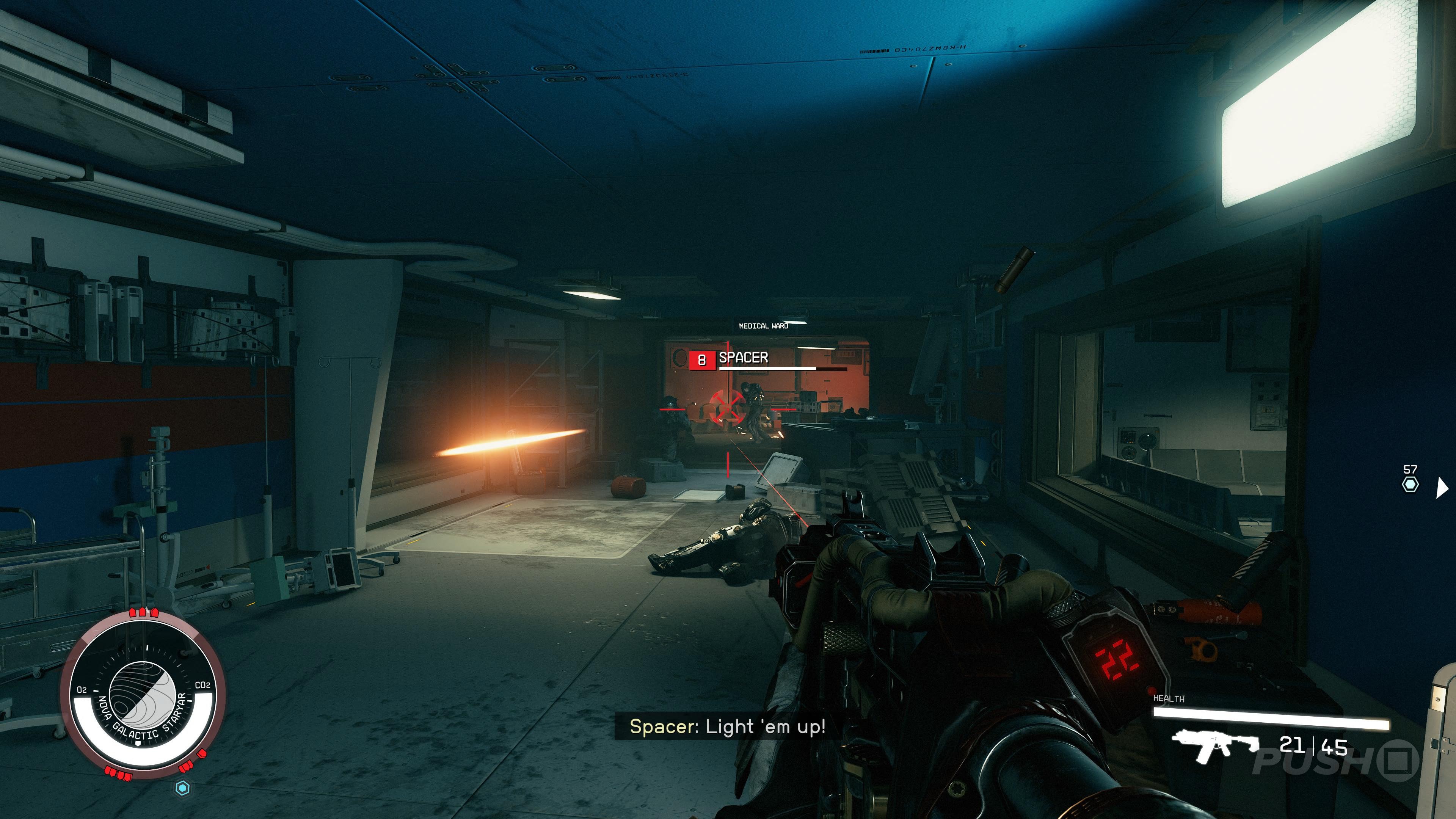
Additional weapon mod slots are another part of the Free Lanes update, which feed into the developer’s best combat system to date — the best compliment you can give it is that no kind of VATS feature is needed to make it work.
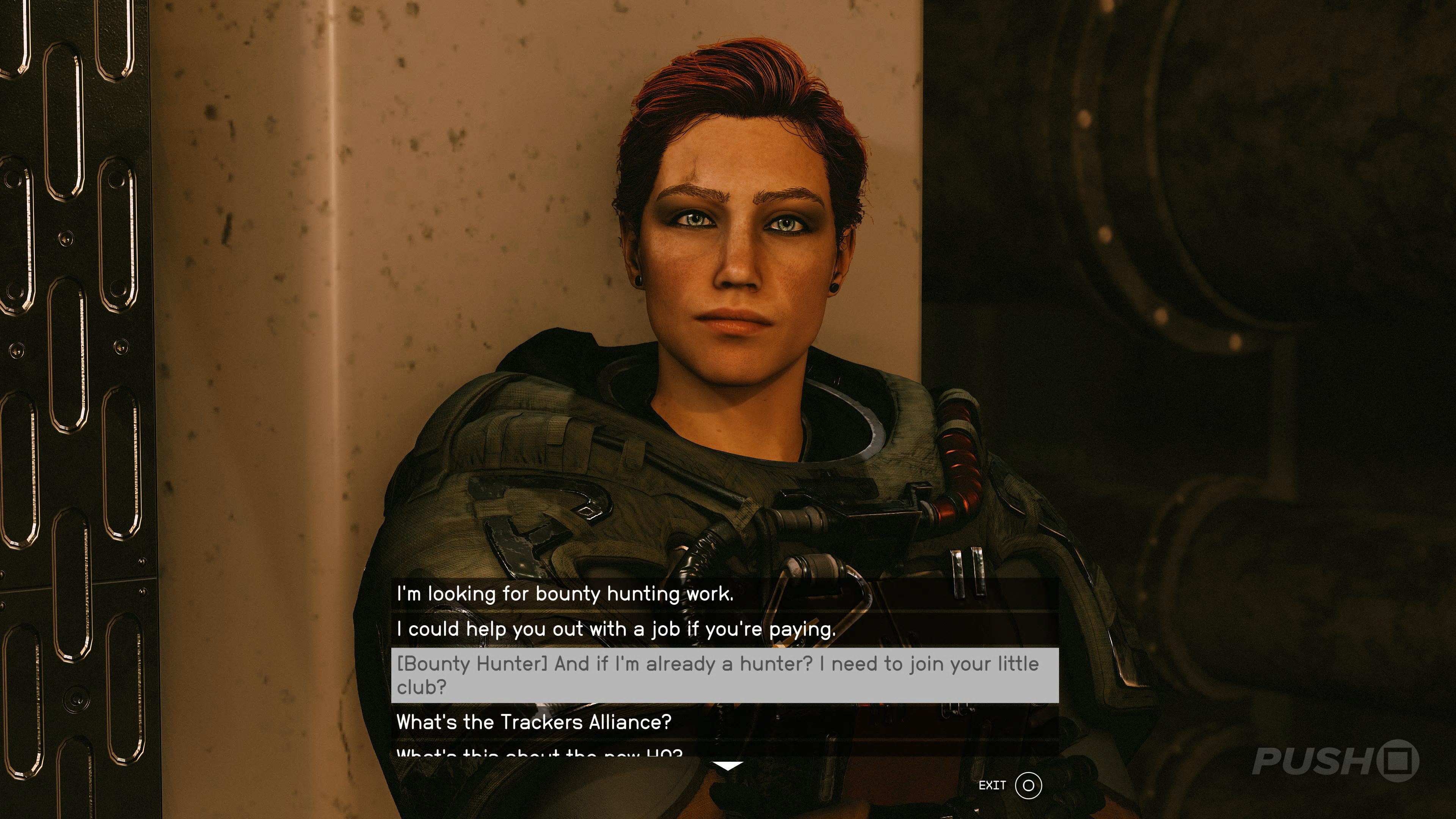
You’ll kit your astronaut out with a variety of guns and melee weapons, all of which are fully customisable to suit your level. Unlockable powers feed into battles and you can bring your companion with you for further support. The classic Bethesda conversation system returns to let you try and talk your way out of a fight, but should you fail any persuasion checks, then robust combat will finish the job.
The same can be said of Starfield’s visuals and performance: the PS5 version runs smoothly without any of the technical flaws from past Bethesda launches. It’s not perfect; you’ll likely encounter the odd glitch here and there, be it a character standing where they shouldn’t be or items clipping through each other. On the whole, though, Starfield on PS5 is a robust and reliable version of the space opera.
It also looks a little better, too, when compared to the launch edition. Having played the RPG at release on Xbox Series X, what PS5 owners will play boasts sharper and better graphics overall. The flora in New Atlantis has never looked more detailed on a console than now.
Base PS5 users can toggle between a Visuals Mode and Performance Mode, with the former aiming for 30 frames-per-second and the latter doubling the target to 60fps. PS5 Pro owners can go one step further with a Pro Visual Mode, offering a 4K resolution at 30fps, or a Pro Performance Mode with a 60fps target. There’s also a 40fps setting, and PSSR technology is in use.
This is exceptional support that covers all bases a PS5 player — no matter if they’re on the original console or the upgraded system — would want. You even have an extra level of control by being able to manually set the frame rate target yourself.
The PS5 version, as such, is comfortably the best Starfield has ever been on a console.
Yet, it still faces the same problems of old. The experience feels like a Bethesda game in fits and starts, as you move from quest to quest and meet new characters along the way. When you move away from that pace, though, the lack of any worthwhile exploration makes it a struggle to stay invested.
A lot of the pieces of a Bethesda classic are there, but not enough neatly connects them all together. It’s disjointed and stumbles exactly as it seems to have built up a head of steam.
Conclusion
Starfield is bigger and better than ever on PS5, but it still crashes against the roadblocks of old. A complete lack of exploration leaves the RPG in an awkward place where it can feel like an objective ticking exercise with little to distract you. Its faction questlines are the highlight, and the improved combat systems and new gameplay capabilities make the experience worthwhile. However, two and a half years later, there is considerably more Starfield. Only some of it makes it better.


Comments 70
Hey everyone, just to quickly clarify: this review covers the base game in its most up-to-date state and the Free Lanes content.
There are two expansions in Shattered Space and Terran Armada available, but these are extra purchases over the original game and don't come as standard. Therefore, I haven't considered their content for this review.
Let me know if you have any questions!
Bethesda has one great game. FO3. Fight me.
Crazy that this game is finally coming out on PS5 after so much drama for so long.
Great review, Liam. I doubt I'll ever play this one now to be honest, but maybe if it's cheap one day in the future.
"Bad exploration" is not a critique you want to hear in a open world rpg, especially when it comes to Bethesda. I'm good.
Damn this generation is whack… only a 7 for GotG! 🤬
As to be expected. Honestly I can see Elder Scrolls 6 scoring the same.
I could forego a weaker exploration if the story is there, but the fact that the story itself is weak and the exploration does not entice, means I will go back to Crimson Desert.
Might start No mans sky as a space alternative.
@psmr game of the generation i dont think so
I played this on series s at launch, clocked about 50 hours in total and I am somewhat interested to play on ps5. The main issue is still there though, that being exploration lacking severely. It’s a staple of Bethesda games and they just aren’t anywhere near as fun without it. That said, the combat is enjoyable, and as always, faction quests are interesting. Will probably wait for a sale to go back to this one.
I love Starfield. Played it on Game Pass and decided to buy it after that. I bought the deluxe edition so I'll be able to jump in this weekend.
Really good review and very fair. The game does have some merits, it takes time to find them but people won't if they don't give it a try. It's interesting that combat was mentioned first as a pro. I remember when that was one of the weakest parts of the game, it shows they did listen and overhaul the A.I. They need to inject more of a reason for exploration and do something about the menus. At first I thought it was just me and that so many menus and sub-menus were normal. Crimson Desert felt similar, like musical chairs for your fingers. I can feel that old UI confusion creeping up just thinking about it. I'll probably try it again just to see how the Pro handles it.
Poor Man's Sky
I'm going in with low expectations. The exploration of Bethesda games is what got me hooked on RPGs to begin with. Hopefully this'll be a nice refresher in theme and pacing between Crimson Desert sessions - a game that is all in on exploration and discovery.
Great to hear of decent Pro support too. Should be looking pristine with PSSR, plus they hadn't mentioned a 40fps mode.
Edit: trying out all the Pro modes and it looks stunning with PSSR. All "Enhanced" modes use the same detail settings and are a step above the "Quality" mode in detail and image quality.
As for the game itself, I can already tell this is more Outer Worlds than TES.
Yeah, if you want a perfect space exploration game that has everything including VR then stick with No Man's Sky. I feel Hello Games next defining masterpiece (Light No Fire) will give Elder Scrolls 6 a swift kick to the bollocks as well. 🤣👍
The new game plus in starfield , someone had this great idea and then it was poorly implemented , it couldve been so much more , but then this is bethesda, im suprised they had the idea to be honest.
Buzzing to get started - it’s been sitting on the console locked since it pre-loaded 😭😭
@Dan12836666 I see that you have a keen understanding of sarcasm 😏
@SEVENTEENSOILS the exploration is very poor because of the procedural generation, it really is bad, i was expecting like a star trek experience discovering new life forms, some cool stories , unless its quest related and it signposts it, there's nothing like that.
Needing to patch in flying between planets is just damn. That should've been there on launch. But then again this game felt undercooked and rushed. Creation enginge is falling appart and I hope for TES 6 they go with a new engine. Cause this ducktaped together monstrosity feels on the verge of collapse.
@LiamCroft thanks for the explanations about the gameplay. I love Bethesda RPGs and even played about 2 hours of Starfield when it released. It’s disappointing to learn it doesn’t have that go anywhere sense of the other titles and is more gamey and tasks-based. Still, I believe I have it pre installed and am looking forward to playing it as soon as I finish Ghost of Yotei - hopefully soon!
Stsrfield is the most boring spade game I’ve ever played, but I hope it appeals to someone.
@lazarus11 yeah it didn't look the best from gameplay I've seen over the years, hence my adjusted expectations of what I'll get from it. I'm more just intrigued to get a vibe of what Bethesda will or won't be implementing in TESVI, and if I have any fun along the way then so be it 😂
Playing on Enhanced Mode at 60fps, Bethesda don't advise 60fps with that option but we will see. Does look really nice though and a big upgrade over my SS version.
@psmr sorry I missed that one 😆 my bad
@LiamCroft what's the creation club mod situation like on playstation?
I know many of the issues I had on my play throughs on my series x were somewhat mitigated by adding a few mods. While there are a lot of paid mods in the creation club there are many more free mods that helped make the experience better, for me at least.
@SEVENTEENSOILS oh there's fun to be had for sure , just keep your expectations really low, its no skyrim or oblivion its not even morrowind.
@LiamCroft is there a noticeable difference between the Quality mode and Performance mode on PS5 in terms of visuals? Is the performance mode a big downgrade?
Arguably the greatest thing about Skyrim was just existing and exploring the world so if those elements are not good in this game then it's a pretty major problem. Almost makes the entire thing a wasted exercise. Which I must say is what it struck me as on release. Although I felt much the same about No Mans Sky despite all the updates. It just feels empty and pointless. Might have to just stop being indecisive and get Crimson Desert.
@RiverGenie from what ive read sony still dont allow outside assets on ps5 , so no star wars mods for playstation users.
Y’all gave this a better score than Crimson?!
@CaptainWow you want that feeling back that skyrim gave you when you first played, remember that ? Crimson desert will not disappoint.
@lazarus11 That's the plan! The Elder Scrolls games are some of my favourites, along with other huge worlds like Dragon's Dogma and I'm definitely not expecting anywhere near those levels. Still, I enjoyed the Mass Effect games and other, more curated RPGs so I'm sure there's something buried in Starfield for me to sink my teeth into, even if the writing and choice isn't there to match.
@danzoEX different reviewers
@SEVENTEENSOILS its the exploration thats the issue , no point having thousands of planets or whatever it is now , and the majority are just big empty rocks, i was expecting like some quests or something , there's literally nothing to find.
@lazarus11
I was following the pre-launch build up really keenly and really expected the reviews and general player feedback to sell me one way or the other. But if anything it's made me even more confused. By so many metrics it looks like my ideal game but something is holding me back.
I'm concerned about how it controls. Ten minutes on a demo would confirm immediately if it was right for me but I've heard some say it's appalling and others say it controls fine.
Just to say I usually don't rely on others opinion if I'm set on a game but after some real disappointments in recent years I've become incredibly fussy about buying games at release and full price.
@lazarus11 Agreed. Even No Mans Sky struggles in this regard and I feel a lot of it is down to the procedurally generated design of planets. Id take a few meticulously hand-crafted worlds over randomised ill-fitted ecosystems.
The reason why Crimson Desert feels so massive is that you can tell so much was placed by hand and with reasoning behind each environmental feature.
Low Man's Sky. Sort of what I was expecting.
I will probably pick it when it's around the £25 - £30 price range. In no rush but I'm definitely somewhat interested at the right price.
@CaptainWow the controls are like a simplified version of elite dangerous , you set power to guns , shields and engines , your allocated certain points depending on the type of ship you have which can be upgraded, the flying is a bit floaty and it had complaints at launch i dont know whether its been fixed,its not a must play, so if youre undecided i suggest waiting for a sale.
@lazarus11
Sorry. I didn't specify. My last post was talking about Crimson Desert!
7/10 is fair and its what i would score it
@ErrantRob Same here, in fact CD has saved my wallet from doshing out for Starfield till a sale. Can't believe it scored higher than CD though, criminal.
@lazarus11 Xbox doesn't have the full Star Wars mod either as it's way bigger than the mod limit we have. Some of the individual assets are available mostly cosmetics but nothing close to a full conversion.
There are a number of mods that I use that help with the UI (StarUI mainly) and a few others I have that removed some pain points such as auto solve temple puzzles (temples are ok to do once but quickly gets tedious.) or a couple that add more varied points of interest.
I hope you all are not too restricted as I found using mods made my play through much more enjoyable.
@Oram77 probably and should be less than a 6 as we all know it's releasing broken after its a guarantee
@SEVENTEENSOILS ive said exactly the same about starfield, why didnt they just have a couple of solar systems with about 20 planets each different with interesting things to discover , would've made the much better game
@RiverGenie didnt mean the star wars project i meant the individual star wars mods , weapons , robots , stormtroopers, lighsabers , ships that kind of stuff , ps has none of it, anything that includes outside assets , including ui...is not allowed
One of the things I remember most about this game was during an interview Todd Howard was asked why the exploration was so empty and he basically said it was because if you go up into space irl there wouldn't be anything there lol Like dude, you're making a sci-fi game. As in science fiction. If real life is boring then make it interesting 🤦♀️
Great review. I have posted this many places including here: The game absolutely has engaging quests and side quests as noted in this piece. They come out of a few hubs, but those hubs are great. If you like Fallout 3 or Skyrim for the side content (me!), you are going to have a blast with this game-easy 8/10 with some flaws (the first few tutorial hours are pretty boring and not great). Also, space combat and building up a garage full of stolen pirate ships to use is pretty cool!
If you are looking for No Man’s Sky, or a game of exploration, or a game where the exciting part is what is over that ridge in the distance, don’t bother. It is not that kind of game at all. People keep comparing it to No Man’s Sky because it is in space (and because Bethesda played a little fast and loose with the marketing), but the games are very different with very different goals.
This is a GREAT game if you are looking for good side quests with a sci-fi shine-they are some of Bethesda’s best. If you are looking to explore, this is not what this game is going for.
I really enjoyed the review!
@JackiePriest I know that mars and the moon are accurately mapped they got the scans from nasa , I thought that was quite cool
@Westernwolf4 its not a bad game by any means , but i can only remember 2 good side quests and one of them is tied to the main quest the other was broken , im presuming they fixed it.
Never planned to buy it on PC. Still have no plans to buy it on PS5. It's lazy Bethesda jank. They were upstaged by multiple older games in many ways.
I hope they lose money on this but we know they won't.
Played for many, many hours on Series X, but never finished. Just could not be bothered.
@lazarus11 Strong disagree. I can think of 8 just off the top of my head that are great and highly memorable, and half of those are multipi-part chains. And I played in 2023. Not listing them here-no spoilers!-but I agree with the review that this has engaging quests.
Not everything is for everyone, so sorry the quests didn’t hit for you the way they did me. This is a divisive game, so all who have played have a very valid opinion to share!
@lazarus11
Could you let me know your thoughts on how Crimson Desert controls? and expand on how it captures that similar Skyrim atmosphere of exploration?
I still haven't played fallout 4.
@CaptainWow the controls do take getting use to , think of it like AC but more complex, every part of the controller is used , the fighting is quite simple at first but as you get more skills it gets more complicated , you hold down the attack buttons rb rt rather than press them, and then press triangle circle etc for the corresponding move , there's a particular move where you press down on the stick this slows down time , and then rotate the right stick so kliff starts doing his neo matrix hand movements he then sucks all debris, bullets arrows into like a tornado , you then press rb to fire them into the enemy , all these button presses are listed at the bottom of the screen on the right as you execute , you dont have to remember those.
So still not good then, and this is meant it be the improved version 😬.
Space Opera the pnp game, is a myriad of dice rolls, charts and more dice rolls. And that’s just to attempt to warp. Good comparison. No exploration or fun things makes it a too-serious experience. Want to see a game that perfects the galaxy travel system? Mass Effect Andromeda did this perfectly with one menu. Other games as well.
@CaptainWow there's caves with treasure to be discovered not just a bag of coins its like magic items, swords, cool armour, proper rewards , there are quest markers , also you use your sword like shadow of the colossus to point out poi,obviously there's the usual fetch quests , but also quests that start off simple like delivery of a letter that turn into a 40 min story , its that whole sense of oooh whats that cave in that mountain miles away , ill go there , ooh what's that hole you go down and find a cave system, with diamonds , it just goes on and on and you realise 4hrs have past and your nowhere near that mountain with a cave
@LiamCroft appreciate this.
The other two reviews I read had a lot of stuff on the dlc which I dont have ans don't want to buy if I don't enjoy the base game
@lazarus11 oof that is kind of rough. I could live without the cosmetic stuff but UI mods do help a lot in cutting down on clicks to get to stuff or see stats. Hopefully someone will figure something out with existing assets for you all.
Hope the playstation folks who try Starfield have fun regardless
@RiverGenie same with skyrim on ps , they did some clever things with lighting but there was no cool water or weather mods, better hair and eyes ,none of it
Score is fair, which makes the Crimson Desert one even more nonsense.
@lazarus11
I think that's made my mind up. : )
@UltimateOtaku91 review literally says 'good'
Lipstick on a pig.
@CaptainWow if you get asked by a woman to deliver a letter to her husband,take plenty of food and a good strong sword 😁 little tip dont go wandering off to far you will die , I mean you can but youll get slaughtered , also listen to npcs they offer clues to quest "yeah he hasn't been seen since he set off for the house in the woods north of the river"....that type of stuff
fair review. comes down to what you want. it isn't a typical Bethesda game. but if you approach it with an open mind, and focus on main quest (which I really enjoyed btw), factions and side quests in the main hubs, there is a LOAD of content, and it's very good.
but if all you want to do is ignore the quests and explore, then it's not the game for you. doesn't make it bad. Just not for you.
@UltimateOtaku91 no its the same version with less bugs ,and now you can fly around the solar system
I'm not sure the comparisons to Skyrim and Fallout are particularly helpful.
They are different titles, and I certainly don't think Skyrim and Fallout are all that once the rose tinted specs are removed.
You can also look at Witcher 2 and Witcher 3, which are quite different games and I wouldn't say one is better than the other.
Baldur's Gate 3 isn't particularly open world either yet no one had any complaints about that aspect, so I don't know where this "essential for an RPG" argument came from.
I think Starfield sits somewhere between Outer Worlds and Fallout, doing some things better than both, and some things worse.
It's a game in its own right that I found quite enjoyable, and like all the games I've mentioned in this post, and many I haven't (Cyberpunk, Crimson etc) they are all 8/10's.
Anyone buying it will complete it and not be able to argue that they didn't get their money's worth on a time v enjoyment v cost basis.
Show Comments
Leave A Comment
Hold on there, you need to login to post a comment...